Shanlong Li
Hi, I am Shanlong Li, postdoc in UMass Amherst. My research focuses on developing multi-scale computational methods to advance our understanding of the dynamics and interactions of bio- and designed macromolecules, including recognition, self-assembly, phase transitions, and aggregation.
Publications
View all on Google Scholar →Models
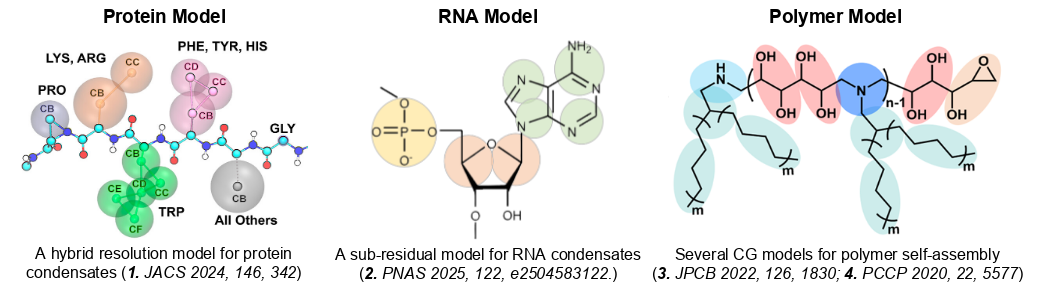
Hybrid resolution coarse-grained model for protein simulations
Intermediate resolution model for RNA simulations
Research Interests
I. Efficient Models for Biomolecules and Polymers
I develop accurate coarse-grained (CG) models for simulating self-assembly and phase behaviors of biomacromolecules on large time and length scales. These models are carefully parameterized using experimental data and all-atom simulations, and are distributed in OpenMM, Gromacs, and Hoomd-blue packages.
II. Biomolecular Condensation and Material Properties
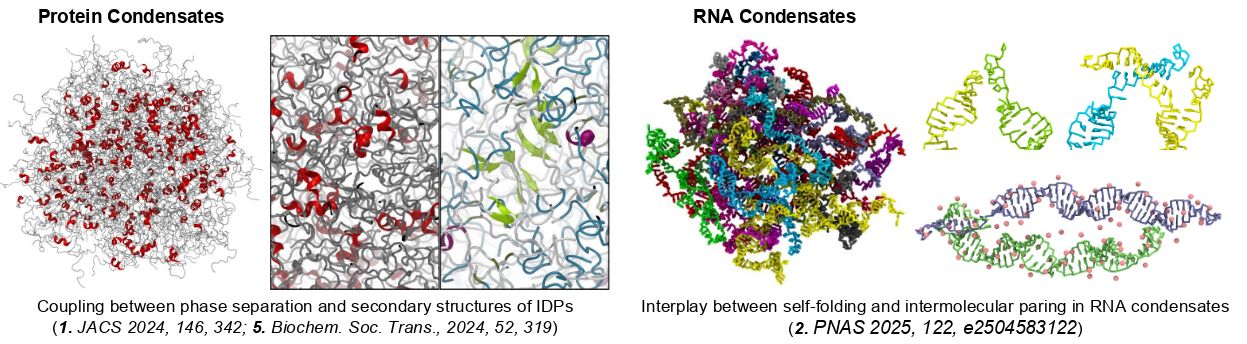
I investigate biomolecular condensates through computational modeling of phase separation in proteins and RNA. My work reveals the coupling between molecular structure and phase behavior, including the roles of folding, pairing, and competitive interactions in determining material properties.
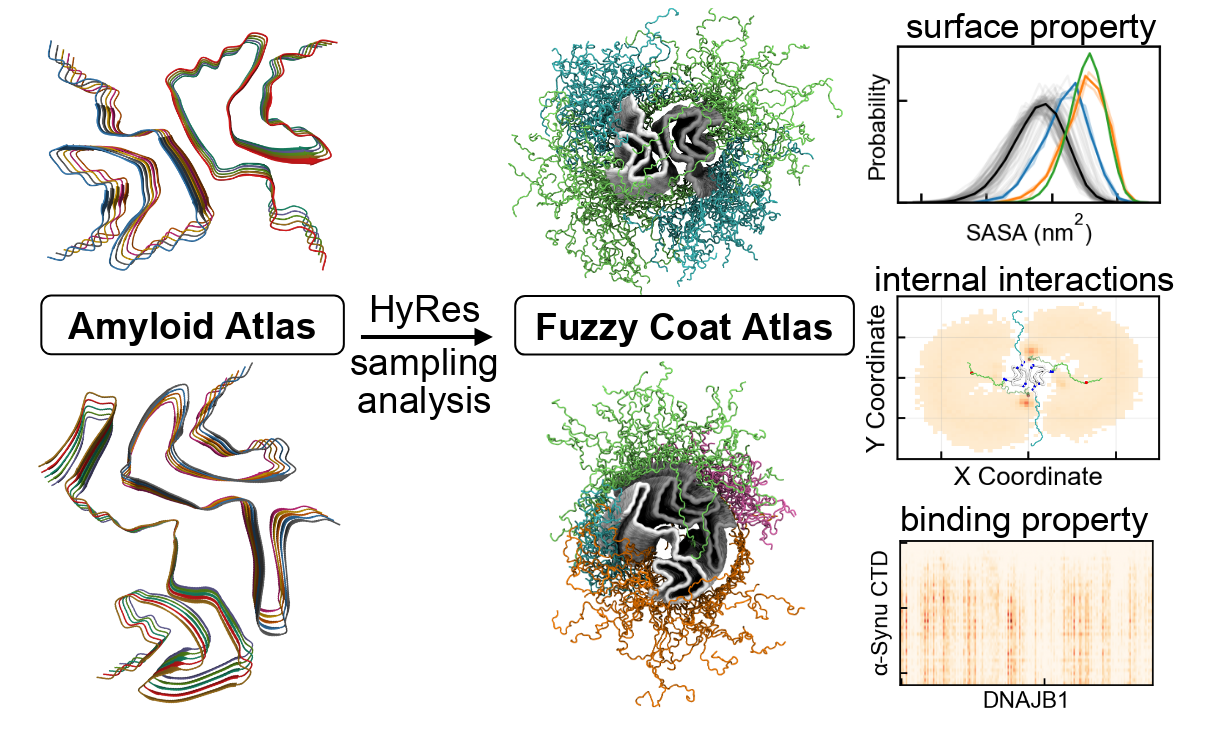
III. Amyloid Fibril Fuzzy Coat
I investigate the structural dynamics and thermodynamic properties of the "fuzzy coat" surrounding amyloid fibrils. While pathogenic aggregates (such as Tau or α-synuclein) feature a highly ordered, rigid cross-β sheet structural core, they are typically flanked by heavily disordered polypeptide segments. Utilizing sophisticated multi-scale molecular modeling, we examine how this flexible fuzzy coat controls fibril stability, surface interactions, and phase behavior in cellular environments.
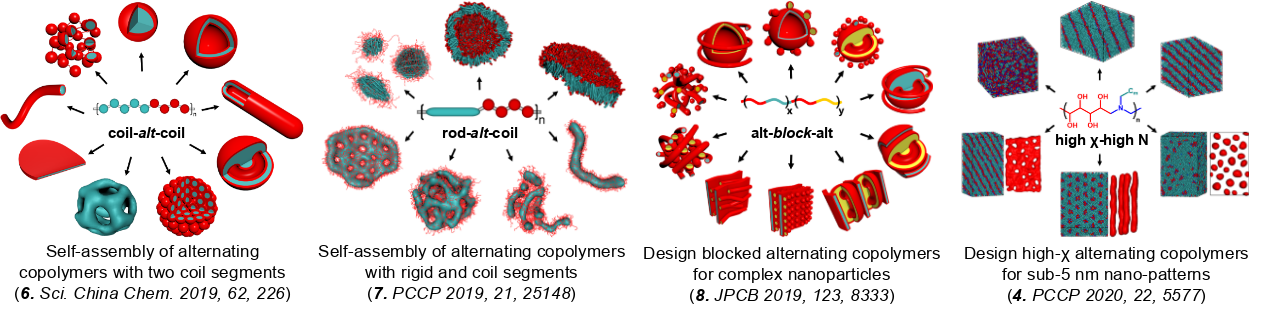
IV. Self-Assembly of Alternating Copolymers
I study the self-assembly and phase behaviors of amphiphilic alternating copolymers for smart nanomaterial design. My work explores the morphological diversity of self-assembled structures and their unique characteristics, with findings validated through experimental collaboration.
V. Experimental Collaboration
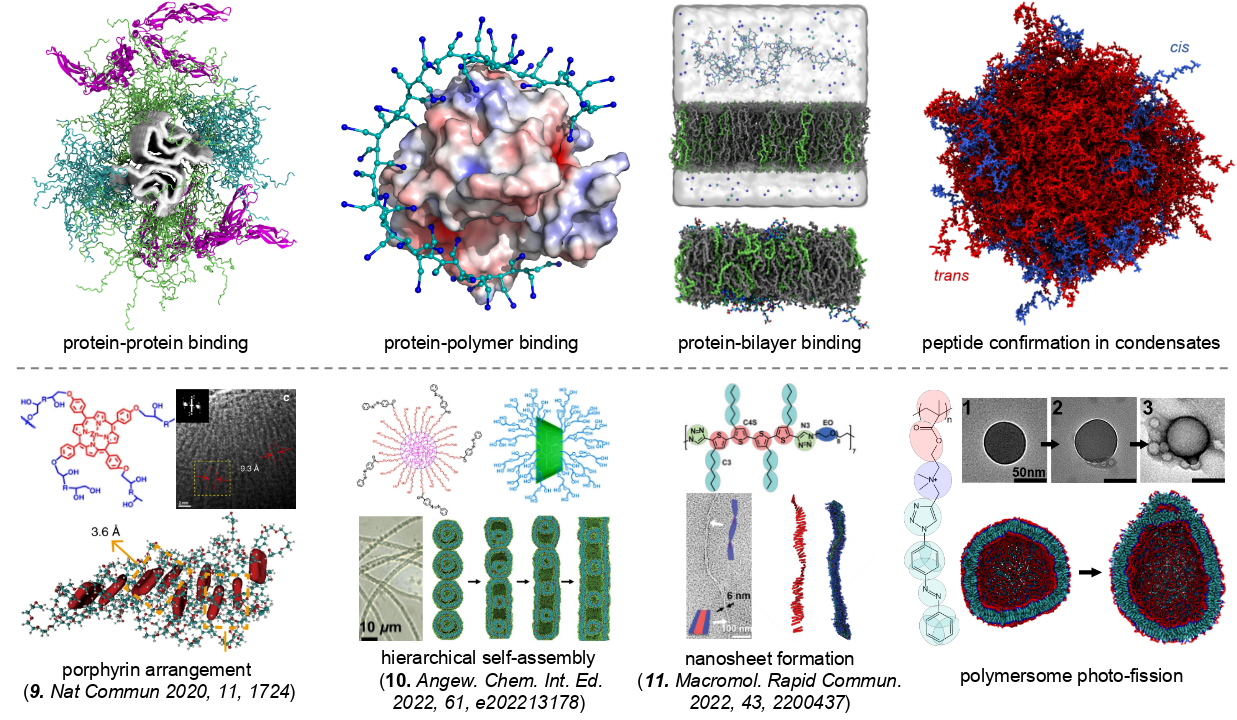
A hallmark of my research is close collaboration with experimentalists. I provide molecular-level insights into complex experimental phenomena across diverse topics—from smart materials and protein-polymer interactions to mesoscale analyses of phase behavior. Through an integrative computational and experimental approach, we reveal and interpret complex behaviors in biological and soft matter systems.